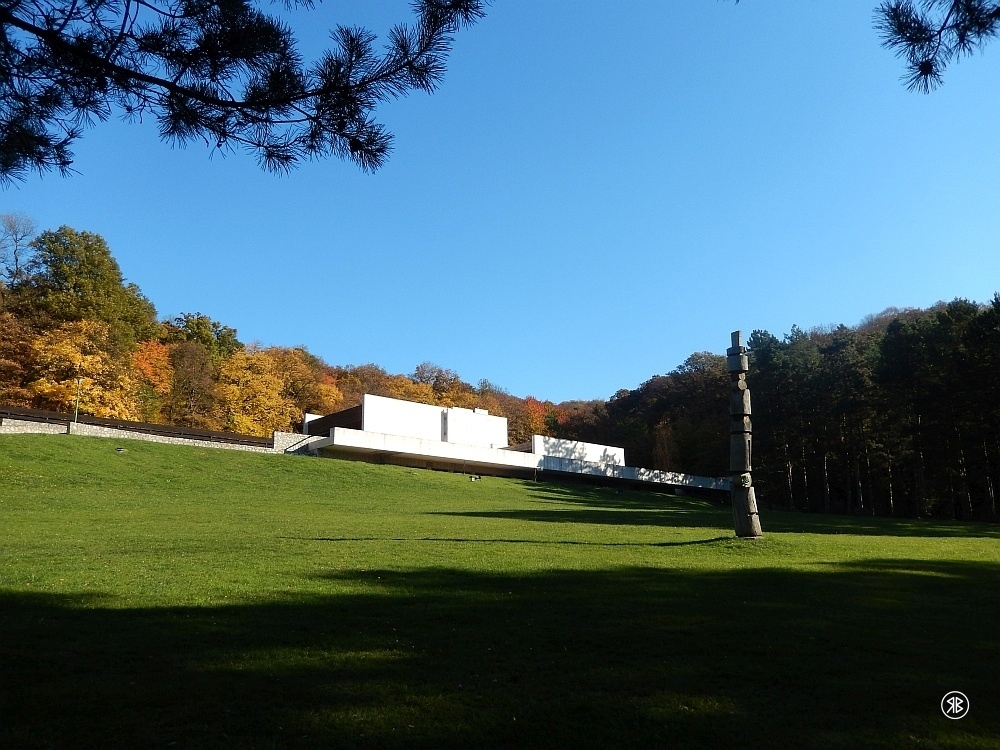
Urnový háj s krematóriom sa realizovali v rokoch 1967/1968 podľa projektu architekta Ferdinanda Milučkého z roku 1962/1963.
Komplex sa nachádza na západe Bratislavy, na svahoch Malých Karpát v riedkom lese.
Je navrhnutý s veľkým citom pre krajinu a aj umiestnenie architektúry do nej.
Duch severskej moderny ho spája s prírodou.
Staré duby a borovice tvoria kontrast s jeho vodorovnými líniami, umiestnenými nad lúkou na kopci.
Je to kultová stavba a jej hodnoty sú hlavne duchovné.
Patrí k najlepším dielam povojnovej architektúry na Slovensku.


Toto všetko, stvárnené zákutie prírody, priestor, architektúra, má svoju prísnu zákonitosť, svoju čistotu.
Je výrazom nesentimentálneho poňatia ľudského osudu.
Je to stále javisko kultu, ktoré má svoj jasný rituál.
Odbočíš z cesty, zastaneš a odídeš.
Vážnosť a dôstojnosť tohto diela nie je chladná, ale srdečná a vľúdna.
Les, jeho večné šumenie, ktorý všetkým preniká, všetko objíma, to bol vrúcny motív.
V tejto architektúre snáď ani nepozorujete rozdiel medzi vonkajškom a vnútrom.
Je to dielo vzácne a rýdze.
Dominik Tatarka
Je výrazom nesentimentálneho poňatia ľudského osudu.
Je to stále javisko kultu, ktoré má svoj jasný rituál.
Odbočíš z cesty, zastaneš a odídeš.
Vážnosť a dôstojnosť tohto diela nie je chladná, ale srdečná a vľúdna.
Les, jeho večné šumenie, ktorý všetkým preniká, všetko objíma, to bol vrúcny motív.
V tejto architektúre snáď ani nepozorujete rozdiel medzi vonkajškom a vnútrom.
Je to dielo vzácne a rýdze.
Dominik Tatarka


